03E-commerce & community
Wrong Sense
Streetwear drops and a VIP programme
One ecosystem for the shop, the collection drops, the restock alerts and the VIP programme. Order verification, collaboration requests and creator tracking were automated to replace the manual back-and-forth that was running through Instagram DMs.
- Role
- Design, build & growth
- Year
- 2026
- Type
- E-commerce & community
- Status
- Delivered
Stack
- Shopify
- Liquid
- TypeScript
- JavaScript
- CSS
- Shopify APIs
- Shopify Flow
- Brevo
- Node.js webhooks
The problem
A streetwear label lives on drops, and a drop is a spike: everything sells in an hour, then the questions arrive. Where is my order, when does it restock, can I collaborate: all of it landing in the same Instagram inbox as the sales.
The VIP programme made that worse rather than better. Access was granted by hand, which meant someone had to open each order, check it was real, and remember who had been let in. The brand was spending its attention on verification instead of on the next collection.
What I built
01
Storefront & drops
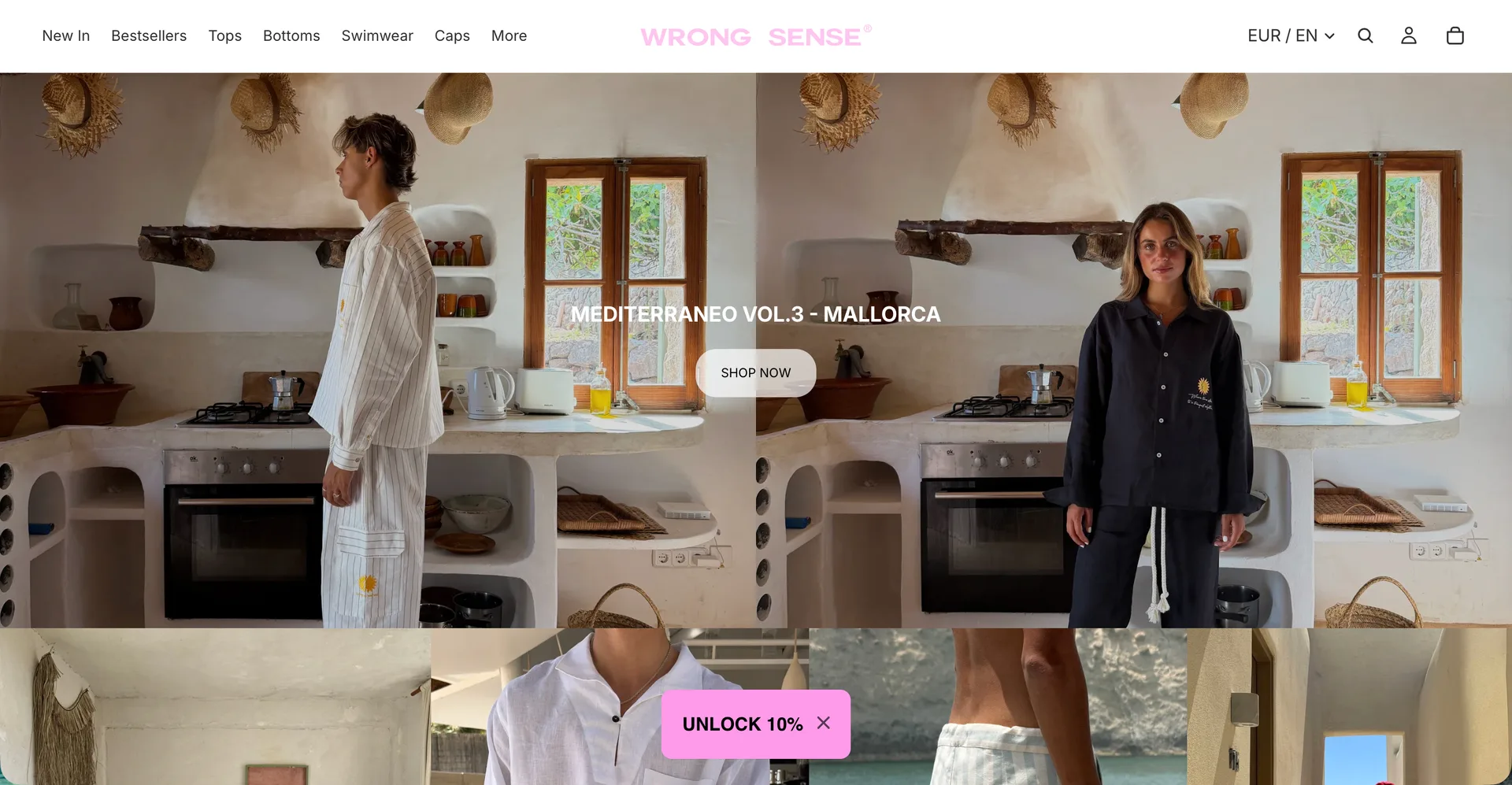
The shop runs on Shopify, with the theme written in Liquid rather than assembled from an off-the-shelf one. The label's identity is the product, and a template that reads like every other streetwear store undoes it.
A drop is scheduled rather than announced, so the release, the product going live and the countdown all come from the same record instead of being coordinated across three places.
Restock interest is captured on the product itself and queued. When stock returns, the alert goes out on its own through Brevo, which is what turned the most repeated DM into something nobody has to answer.
02
VIP & verification
Order verification is derived from the order itself, not from a screenshot sent in a message: a Shopify webhook hands the paid order to a Node.js service that grants the access it earns, and the programme's tiers follow from purchase history rather than from someone's memory.
Collaboration and ambassador requests get their own intake, so a creator pitch is a record with a status instead of a message that scrolls away.
03
Community & content
Campaign shoots, UGC and the ambassador programme were planned as part of the platform rather than bolted on, so a drop, its content and the creators pushing it share one calendar.
Engineering decisions
Scheduled releases
A drop's visibility is computed from its release time, so nothing has to be published by hand at midnight and nothing leaks early.
Order-derived access
VIP status is read from paid orders rather than stored as a flag someone sets. There is no manual grant to get wrong or forget to revoke.
Automation where it belongs
Routine reactions run in Shopify Flow, and only what Flow cannot express drops down to a Node.js webhook. The brand can read most of its own automation without opening an editor.
Outcome
A label that can run a drop without the drop running the inbox: orders verify themselves, restock alerts leave on their own, and creator requests arrive somewhere they can be answered.
The audience work was scoped through the first 10,000 qualified followers, a target the platform was built to support, not a number it has already delivered.